Monday, June 8, 2009

Union Hospital #10


On November 7, 1861 the Civil War arrived in Beaufort with one, cataclysmic battle. In only a few hours, what had been the home of one of the most ardent champions of secession and slavery, fell to the Union. Still other forces, however, were about to overtake Beaufort with even more profound effect, for Beaufort was about to become the stage for “the most drastic social changes ever attempted in American History.”14

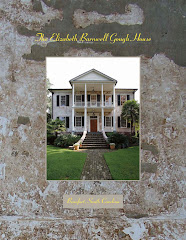
Nowhere were these changes more poignantly reflected than in the Elizabeth Barnwell Gough House. One of Beaufort’s grandest homes, it stood before the war as a symbol of the town’s wealth and privilege. As the boyhood home of the Father of Secession, it was also a symbol of Beaufort as the cradle of Secessionist sentiment. With no little irony, two years to the day after the firing on Fort Sumter, it would become a hospital serving the wounded from three of the most celebrated black regiments fighting for the Union and equality.

The Massachusetts 54th, the 1st and 2nd South Carolina Volunteers – together with the Northern abolitionists and doctors John Milton Hawks and wife Esther Hill Hawks, Clara Barton, Susie King Taylor and in all likelihood famed Harriet Tubman – came to 705 Washington Street as they played their parts in one of the most important dramas of the age.For, immediately upon occupying Beaufort, the Union appropriated many of the abandoned homes. A few served as headquarters for high ranking officers or administrative officials, others for billeting subordinates and a number as hospitals.

Initially, hospitals in Beaufort served both white and black wounded, but the arrangement proved unsatisfactory. Though the black soldiers were showing themselves to be more than competent on the battlefield, their Northern counterparts often resented their presence in the hospitals and vented their prejudice with verbal abuse and petty acts of harassment. Worse was the fact that the black soldiers often received unequal medical care. On the 12th of April 1863, the War Department responded to the need for separate facilities for white and black soldiers by making the Elizabeth Barnwell Gough House the first sanctioned hospital for colored soldiers, known as Hospital #10.*

The first wounded to come to the hospital were from the 1st South Carolina Volunteers after the Jacksonville expedition. The first of a series of forays conducted from Beaufort into Confederate Florida, the expedition was also the first to prove the 1st SC Volunteers in battle. The soldiers performed so well both in training and under fire that their commander, Col. Thomas Wentworth Higginson, wrote in his journal that the question had become not whether black soldiers would be as good as whites, but if the black soldiers were in actuality better.

In charge of the hospital was Dr. John Milton Hawks, an ardent abolitionist from New Hampshire. His wife Esther Hill Hawks served as a nurse and her brother as steward. It is from her diaries that we have accounts of the early months of the house’s tenure as Hospital #10, starting with its earliest days.“The house was one of the Barnwell mansions – and when our troops came here, magnificently furnished but 18 months occupation by soldiers leaves nothing but a filthy shell; Mrs. Strong, wife of our Maj. was appointed nurse by Mrs. Lander**, and she and I went about for weeks with rag in hand, overseeing and instructing in cleaning. We already had between 20 and 30 patients – and this, with getting things in order, kept us very busy.”15

The 20 or 30 initial patients were soon overtaken by a much larger number of wounded from the famed Battle of Battery Wagner.

Again from Esther Hill Hawks’ diary –“July18th! never to be forgotten day! After many days of anxious waiting the news came, “Prepare immediately to receive 500 wounded men,” indeed they were already at the dock! And before morning we had taken possession of the building where our first hospital was started… 150 of the brave boys from the 54th Mass. Col. Shaw’s Regt. Were brought to us and laid on blankets on the floor all mangled and ghastly. What a terrible sight it was! It was 36 hours since the awful struggle…and nothing had been done for them. We had no beds, and no means of building a fire, but the colored people came promptly to our aid and almost before we knew what we needed they brought us buckets full of nice broth and gruels, pitchers of lemonade, fruits cakes, vegetables indeed everything needed for the immediate wants of the men was furnished – not for one day but for many (Then too the Sanitary Com. Blessed us with its ready aid. Everything for our immediate wants was furnished and in 24 hours the poor fellows were lying with clean clothes and dressed wounds in comfortable beds, and we breathed freely again) before setting about creating a hospital: no one, unless they have had the experience can imagine the amount of work and worry needed in setting one of these vast military machines in motion! And in this case humanity demanded that the poor fellows who had fought so bravely, should be first attended to. The colored people still continued to supply delicacies and more substantial aid came from the citizens and Sanitary Com. (It was a busy time, and the amount of work done in the first 24 hours, by the two surgeons, and one sick woman is tiresome to remember! The only thing that sustained us was the patient endurance of those stricken heroes before us, with their ghastly wounds cheerful & courageous, many a poor fellow sighing that his right arm was shattered beyond hope of striking another blow for freedom!…”16

The August 1, 1863 issue of the Beaufort newspaper The Free South lists the names of 67 members of the 54th in Hospital #10.Elias Artist, G. Alexander, John Barker, Samuel Berry, John A. Boulden, W. Briggs, David Bronson, Thomas E. Burley, Thos. E. Buyers, Wm. Buyers, C. Charlton, Callhill Charlton, Jacob Christy, Charles Clark, James Cole, James Coleman, James Conkleton, Wesley Conkleton, Wm. Conkleton, Thomas Cooper, Anthony Dean, Samuel DeForrest, L. Delaney, G. Fisher, Eli Franklin, Joseph Gallas, Martin Gilman, Peter Glasby, P. Glastnally, Charles Goff, Benj. Granger, G.H. Hall, G. Harlbart, John Hedgepath, A. Hill, James Jackson, Sanford Jackson, John Johnson, Joseph Johnson, B. Krass, John L. King, W.R. Lee, John Lott, V.M. Mago, Edw. Mills, Wm. Milton, John Mogan, Samuel Moles, J.H. Montgomery, J.A. Palmer, Ned Pegrin, John Price, W.A. Rankins, Charles K. Reason, James Riley, George Rivers, G. Rust, John Shafter, B. Smith, Jr., B. Thompson, G. Thompson, Sam Tipton, H. Tucker, John Turner, George Washington, H. White, Chas. Whitney, Edward Williams, S. Winnis

From Esther Hill Hawks’ diary we get to know some of the men behind the names.“Many have died, several cases of gangrene have been provided for in tents: Two severe amputations today neither surviving but a few hours. One of these, a boy hardly 20 years old, Charley Reason, formerly a slave, but of late years resident in Syracuse NY., I have taken a great interest in; he is such a noble looking fellow, and so uncomplaining – so grateful when I bathe his head and face, as I sat by him holding his one poor hand! Oh yes! He said in reply to my question of why he came to war! I know what I am fighting for, only a few years ago I ran away from a man in Maryland who said he owned me and since then I’ve worked on a farm in Syracuse but as soon as the government would take me I came to fight, not for my country, I never had any, but to gain one[.]

“I find many of these men have been slaves, but by far the greater proportion were born and bred in the free north -- A few are from Canada. Some few well educated -- three graduates from Oberlin. They are intelligent, courteous, cheerful and kind, and I pity the humanity which, on close acquaintance with these men, still retains the unworthy prejudice against color!

"Three Krunkleton [sic] brothers, noble, stalwart men, lay side by side severely wounded! The fourth who had left home with them fell and was buried with his Col. at Fort Wagna [Battery Wagner...]

"One young man, Jonny Lott, one of my especial pets a handsome boy, a mere boy, who had come from the far west to bear his part of suffering, had his right arm shattered and his life was, for many days, despaired of, and in the long days of weary restlessness I learned the brave spirit of the boy well. He was well educated – had taught a term in a colored school[...]

"[T]he seventy under our care won golden opinions from us all by their patience in bearing the petty annoyances and deprivations to which all must be subjected – and during the two months that I went in and out among them no difficulties occurred which my presence and word could not settle. I endeavored with my whole heart, to make this dreary hospital life, as home-like as possible — and I was richly rewarded by their grateful thanks.”17

The hospital’s tenure as a place of compassionate care changed, however, by mid-September of that year when Dr. Charles Mead, formerly the Assistant Surgeon of the 112th New York Infantry was placed in charge. Esther Hill Hawks left the hospital at about the same time, returning in October and November as a teacher. She describes Dr. Mead as “a young, ineficient disipated negro-hating tyrant.” Embezzler of foods and clothing sent to the 54th Massachusetts from Boston, Dr. Mead was “most heartily hated by the men”…and “soon ran his course in the hospital, but not before almost every patient in it had served a few days in the jail for some trivial offense.”18

In November, Esther Hill Hawks left the hospital to join her husband, John Milton Hawks, recently promoted to Surgeon for the 3rd SC Regiment on Hilton Head Island. With her departure, her first hand account of life in Hospital #10 ends.

The Elizabeth Barnwell Gough House, though, continued to serve as Hospital #10 as Beaufort’s black troops continued to see battle. In January of 1864, the troops played a major role in the Battle of Olustee, Florida. Five months before the war’s end they served at the Battle of Honey Hill and on April 18, 1865, nine days after Lee’s surrender to Grant at Appomattox, the Massachusetts 54th fought in the Battle of Boykins Mill. It was the last battle of the war in South Carolina thus bringing their service and the Elizabeth Barnwell Gough House’s tenure as a hospital to an end.


*Later in the war two neighboring buildings – the H. M. Fuller House (where the University of South Carolina Performing Arts Building now stands) and the Beaufort College Building (in the Civil War era photo at left)– were also converted to hospitals and were known collectively with the Elizabeth Barnwell Gough House as the Hospital #10 complex.

**A former actress and head of the Sanitary Commision in Beaufort

14. Willie Lee Rose, Rehearsal for Reconstruction, the Port Royal Experiment, University of Georgia Press, Athens Georgia, 1964, page xi
15 The Diary of Esther Hill Hawks as cited by Gerald Swartz, A Woman Doctor’s Civil War, University of South Carolina Press, Columbia, SC 1984, page 48
16Ibid,, page 50
17Ibid, page 51
18Ibid, page 54

Please note that the material in this blog is copyrighted. It is not to be reproduced without my specific written permission.

From Slaves to Contraband


With the arrival of the fleet and the fall of Fort Walker and Fort Beauregard, the whites of Beaufort fled, leaving behind an enslaved population of 8,000 in town and on the neighboring Sea Islands.

Giving vent to years of silenced resentment and the joy of perceived sudden freedom, the black population responded with rampant looting and widespread destruction. Order was soon restored under Union occupation, however, over a year would pass before the government would recognize the former slaves as free with the Emancipation Proclamation of January 1, 1863.

Until then, the former slaves were considered contraband of war. Known simply as contraband, they had a limbo status of neither slave nor free, a status that reflected Northern political considerations. Politically, the war was proceeding poorly for the North. A threatened Washington was dependent on the continued neutrality of the border states – a neutrality that would have been jeopardized with emancipation.

The prolonged contraband status also reflected an underlying racial prejudice, as evidenced in the satirical drawings that ran in Harper’s Weekly immediately after the fall of Forts Walker and Beauregard (shown at left). Such drawings both revealed and fed the racial prejudice of the era.

Racial attitudes of the time led many whites to believe the former slaves incapable of functioning as free individuals and any thought of a future society where white and black lived together as equals was inconceivable.

As the North pondered possible ‘solutions’ such as the repatriation of blacks to Africa or the creation of colonies in Haiti, the former slaves remained contraband.

Please note that the material in this blog is copyrighted. It is not to be reproduced without my specific written permission.

The 1861 Evacuation


By November 2, 1861, Confederate intelligence had determined that Commodore Samuel F. DuPont and his Union armada were headed for Port Royal. Residents were advised to evacuate. All across Beaufort the white population made hasty arrangements to flee inland to safety. Many took only a few necessities, expecting to return after a successful Southern defense of the harbor.

An American Family by Stephen Barnwell relates a poignant firsthand account from Anne Barnwell Walker, fifth daughter of John Gibbes Barnwell, of that last Sunday in Beaufort before the invasion.

“[The day was] beautiful beyond description. Our hearts were filled with patriotism and devotion while the organ pealed the beautiful hymn ‘God save the South.’ Dr. Walker* preached a sermon full of faith in their cause, reminding his flock ‘that God is nigh to all who call upon Him.’ He announced that he would ring the bells of the church the next day at noon and asked the heads of families ‘to gather their households together and hold family prayers’ (such as few neglected to do at least once every day in those far off times). We were subdued as we walked home, but we never dreamed of the fate before us.”12

Another firsthand account in An American Family comes from Anne Walker’s daughter Emily. She relates her memories of the anguishing last hours for the family at 705 Washington Street.“[I] went around to Grandma’s to see what they were going to do…
“Grandma was born in exile in Maryland when we were fighting our ancestors the English… Grandma was now eighty-two. She, Aunts Sarah and Emily decided on account of Grandma’s age they would leave at once. The coachman, Daddy Sam, was told to drive the carriage to the front door…The negroes made up a bed on a stretcher for Grandma, looking broken hearted, no talking by anyone except what was absolutely necessary. Grandma sat in a chair. Daddy Will [the butler] took it up on one side; Daddy Sam in the other. She was placed on the bed. Aunt Sarah, Aunt Emily, Maum Tenah got in, the door shut and they started on their long journey. Me? I was too excited to cry. I turned off for home little thinking that years would pass before I would see the old house again…”13

*Dr. Joseph Rogers Walker was the second husband of Mariana Smith, the eldest daughter of Marianna Gough Smith. He became pastor of St. Helena’s Church in 1823 and would serve until his retirement in 1878 with the exception of the five years of Federal occupation. A powerful religious influence in Beaufort, Dr. Walker was responsible for more than a score of young men entering the ministry, including his brother Dr. Edward Tabb Walker, who married Anne Bull Barnwell.

12The Story of an American Family, page 190
13Ibid, page 190

Please note that the material in this blog is copyrighted. It is not to be reproduced without my specific written permission.


The Day of the Big Gun Shoot


October 29, 1861, the Union launched the largest US naval and amphibious expedition in its history – a force that would not be matched until the 20th c. Its mission was the taking of Port Royal, the finest, natural deep-water port on the East Coast south of New York. Guarded by Fort Walker on Hilton Head and Fort Beauregard at Bay Point, the port was vital to the Union both as a coaling station for blockade ships and as a strategic toehold in the South.

Also at stake was something less tangible, but equally critical, Northern morale. Deeply shaken by the defeat and heavy losses at Bull Run and an apparently stalled war effort, the North needed a victory. With Commodore Samuel Francis DuPont in command aboard the flagship USS Wabash, “one of the most important maritime engagements in the Civil War”11 was about to begin.

The morning of November 7th ushered in a new age in naval warfare. With the increased maneuverability afforded by steam power, naval warships for the first time had an advantage over fixed fortifications. In the four-hour siege that could be heard as far away as Lobeco, the USS Wabash alone fired 888 shots. In the battle that came to be known locally as the “Day of the Big Gun Shoot,” the forts proved no match for Union’s 157 guns. By 2:30 in the afternoon, both forts were abandoned and the North had its first significant victory in the war.

11The History of Beaufort County, South Carolina, page 451

Please note that the material in this blog is copyrighted. It is not to be reproduced without my specific written permission.

The Events of 1819 and 1825


Antebellum accounts describe the tremendous feasts that Beaufort planters regularly hosted for each other. The tables groaning with food and libation were testimony to their wealth, sea island abundance and a friendly competition among the planters as they tried with each feast to outdo each other.

At one point when the celebrations threatened to exceed even the planters’ standards for acceptable proportions, the Agricultural Society stepped in to institute a fine of 50 cents to discourage members from serving more than six dishes of meat at a single gathering.9

In a Beaufort accustomed to lavish celebrations, three would be remembered for surpassing all others. And John Gibbes Barnwell was fortunate enough to live to see and participate in all three -- the visit of President James Monroe in 1819, the Fourth of July Celebration of the same year and the visit of the Marquis de Lafayette in 1825.

In 1819, President Monroe was enroute to inspect the new territories of East and West Florida, recently acquired through the Adams-Onis Treaty with Spain. After crossing the Whale Branch River on the Port Royal Ferry, Monroe was met by virtually all of Beaufort’s white, adult male population on horseback. The presidential party (which included Secretary of War John C. Calhoun and South Carolina Governor John Geddes) was escorted by the welcoming crowd the six miles to town.

The spontaneous parade most likely followed what is now Boundary and Carteret Streets, taking the fifth president of the United States directly by the Elizabeth Barnwell Gough House. It is easy to imagine the excitement generated by the procession and a not quite three-year- old John Gibbes Barnwell II and his older sisters watching from the grounds as it passed by.

The next day after an inspection tour of Fort Marion on Spanish Point, Monroe was given a banquet hosted by the “citizens of the College10 which included John Gibbes Barnwell as a member of the Board. The evening was marked by numerous patriotic toasts and an outpouring of national and civic pride.

So great were the town’s emotions, they apparently could not be given full expression in one evening. So Beaufort was prompted to reprise the event two months later with the most memorable Fourth of July celebration in its history. Reportedly, a total of 31 toasts were made. With etiquette of the time dictating that an offered drink or toast was never refused, it is a wonder who among the celebrants was able to keep count. Unless it was John Gibbes Barnwell, for he is said to have found a singular way around the custom.

As the story goes on his wedding day, his friends offered him glass after glass of wine to celebrate, hoping to see John, who was known for moderation, for once inebriated. But much to their surprise, John continued to show no side effects, until it was discovered that he had been pouring the contents of each glass into his high cravat. He was soaked, but sober for his wedding.
The third high point for Beaufort, and certainly for John Gibbes Barnwell as well, was the visit of the Marquis de Lafayette in 1825. The town had declared the entire day a holiday in his honor. But weather and the tide delayed his arrival aboard the steamship SS Henry Shultz until 11:00 PM. Even his late arrival, though, could not deter the town from welcoming one of the most celebrated and beloved heroes of the American Revolution. Like Monroe, he was greeted by virtually the entire town. This time the town turned out with a spontaneous candlelight procession up Bay Street to a dress ball held in his honor.

9Theodore Rosengarten, Tombee, Portrait of a Cotton Planter, William Morrow and Company, Inc., New York, page 11
10The History of Beaufort County, South Carolina, page 291

Please note that the material in this blog is copyrighted. It is not to be reproduced without my specific written permission.

John Gibbes Barnwell's Lands


A highly successful planter, John Gibbes Barnwell owned more than six plantations. His first and chief property was his 2000 acre plantation on Coosaw Island. He later inherited property on Parris Island and in the 1820s he purchased a plantation from Frenchman Georges Roupel known as The Ferry. It was named for its location next to the Port Royal Ferry at the northern tip of Port Royal Island overlooking the Whale Branch River. When the main house at The Ferry burned, John Gibbes Barnwell built a new one on the ruins of the old and named the property Roupelmonde. He later gave the plantation to his daughter Mary, possibly to serve as part of her dowry. She married Col. Middleton Stuart in 1829, the year following her father’s death.

At the time of his death, John Gibbes Barnwell properties also included a one-eigth share in the 4000 acre hunting preserve known today as Hunting Island and Retreat Plantation, both of which his son inherited. John Gibbes Barnwell II later sold Retreat Plantation to Rev. Edward T. Walker, the husband of his younger sister Ann Bull Barnwell.

After the death of his father, John Gibbes Barnwell II took over the management of the family’s properties, which included an additional two plantations on the mainland and 146 acres on Pigeon Point that his mother acquired in 1839.

The antebellum world of wealth and privilege based on the plantation system and slavery, however, would not last John Gibbes Barnwell II’s lifetime. On November 7, 1861 Union forces entered Port Royal Sound – their objective to take the finest, natural deep-water port south of New York. Fort Beauregard and Fort Walker soon fell, leaving Beaufort and the surrounding islands to the Union for the duration of the war.

Please note that the material in this blog is copyrighted. It is not to be reproduced without my specific written permission.

John Gibbes Barnwell


The eldest of five children and only surviving son of General John Barnwell, John Gibbes Barnwell was born February 1778, the year his father was first elected to the State Senate.

According to family lore, when he was only sixteen his father put his capabilities as a planter to a test on the General’s 2000-acre Coosaw Island plantation, promising his son the plantation if he proved successful.

He proved a more than competent planter and Coosaw Island soon became his. By the 1820s, his holdings included his principle plantation on Coosaw Island, part of Parris Island, the Retreat Plantation, a plantation on the northern end of Port Royal called Roupelmonde as well as two more plantations. He also bought the Elizabeth Barnwell Gough House, a purchase that would keep the two-story tabby mansion in the Barnwell family until the turn of the century.

John Gibbes Barnwell along with (later General) Stephen Elliot, John Fripp, E.M. Capers and Dr. D.W. Jenkins also owned a small island off St. Helena Island that the men used as a hunting preserve. The practice was continued by their heirs, ultimately giving the island the name it has today -- Hunting Island. According to his hunting partner Stephen Elliot, John Gibbes Barnwell had his share of the Barnwell spirit. A daredevil, he is said to have made a practice of diving under water to pull alligators from their lairs.Also independent minded like so many of his family, John Gibbes Barnwell flouted the law by teaching a slave named Venture to read, write and do simple arithmetic eventually making him the sole manager of one of his plantations.

Like many of the Barnwells, John was tall, 6’2”, and possessed of the Barnwell family good looks, but unlike his father and Uncle Robert, he was not active politically. The Barnwell family’s interest in politics appears to have skipped generations, with Gen. John and Senator Robert emulating their grandfather Tuscarora Jack and John Gibbes Barnwell following in the footsteps of his grandfather Nathaniel. Like his grandfather, he devoted his energies more to his holdings. The only exception was during the War of 1812.

During the war, he served in the First Regiment of Militia in Beaufort, making the rank of Captain of Company B. John, like Beaufort, though, saw little action. There was a brief blockade of St. Helena Sound by two British armed brigs, the HMS Mosell and HMS Calabri, before a hurricane drove them out to sea, sinking one. At Sen. Robert Barnwell’s urging Fort Marion was built for the defense of Beaufort on Spanish Point at the site of Revolutionary War Fort Lyttelton. The greatest effect of the war was a boom economy brought on by the troops stationed in the town and the highest prices for sea island cotton for decades to come.

In addition to serving in the militia, John was also on the Board of Beaufort College and a vestryman for St. Helena’s Church. The positions he held, while not especially politically powerful, were indicative of someone of his wealth and family connections. They assured him (if not simply by his wealth and the Barnwell name) a prominent role in three of the most exciting events in the Beaufort in his lifetime: the visit of President James Monroe in 1819, the heady Fourth of July celebration of 1819 and the visit of the Marquis de Lafayette in 1825.

John Gibbes Barnwell by all appearances was blessed in his personal life as well. Like so many of the Barnwells, John married a first cousin, Sarah Bull daughter of General Stephen Bull and Anne Barnwell. Sarah was born December 18, 1782 in Maryland, where the family had been forced to seek safety during the Revolution. John and his wife Sarah had seven children all of whom lived to adulthood. They were:

Eliza Barnwell born 1807
Charlotte Bull Barnwell born 1810
Mary Howe Barnwell born 1812
Sarah Bull Barnwell born 1814
John Gibbes Barnwell born 1816
Anne Bull Barnwell born 1818
Emily Howe Barnwell born 1820

In addition to his own children, John was the guardian of his uncle Senator Robert Barnwell’s four younger children following the Senator’s death in 1814. They were:

Robert Woodward Barnwell born 1801
William Hazzard Wigg Barnwell born 1806
Mary Gibbes Barnwell born 1808
Esther Hutson Barnwell born 1809

The house at 705 Washington was no doubt again a center of youthful Barnwell activity.With the Captain’s death is 1828, his former ward and now son-in-law, Robert Woodward Barnwell became the guardian of John’s younger children. Robert, like his cousin Robert Barnwell Rhett, would in the ensuing decades become one of Beaufort’s leading public figures. A graduate of Beaufort College, Robert Woodward Barnwell continued his studies at Harvard. Elected to Phi Beta Kappa his junior year, he was valedictorian for the class of 1821, a class noted for the exceptional number of graduates who would later attain prominence in their respective fields – including Ralph Waldo Emerson, who was to remain a lifelong friend of Robert’s. Elected to the 21st and 22nd U.S. Congress and appointed interim US Senator in 1850, he was an early champion of Nullification. Originally opposed to secession, he changed his position after the election of Lincoln and was one of the framers of the Confederate Constitution. He declined Jefferson Davis’ offer of the position of Secretary of State for the Confederacy, but served in the Confederate Senate throughout its brief existence, representing South Carolina.

During his early career he was also elected 3rd President of South Carolina College and was responsible for significantly expanding its enrollment and facilities, which included the creation of a library that was considered one of the top two in the South, surpassing the libraries of Princeton and Columbia Universities.While his cousin and early law partner, Robert Barnwell Rhett, was known as a “fire eater,” Robert Woodward Barnwell was admired for his modesty, kindness and fine mind. Not the least of his accomplishments during his lifetime was his role in rearing his and wife Eliza’s thirteen children in additon to serving as guardian to his wife’s younger siblings upon the death of her father.

In the close knit extended Barnwell family, the two branches would be particularly intertwined, with Robert Woodward Barnwell and Eliza giving several of their children the same names as other family members. They were:

John Gibbes Barnwell born 1831 (named for Eliza’s father and brother)
William Hazzard Wigg Barnwell 1836 (named for Robert’s brother)
Sarah Bull Barnwell born in 1840 (named for Eliza’s mother and third sister)
Charlotte Bull Barnwell born 1848 (named for first Eliza’s sister)
Emily Howe Barnwell born 1850 (named for Eliza’s fifth and youngest sister)

Captain John Gibbes Barnwell’s son, (later Major) John Gibbes Barnwell followed the same practice, naming one son John Gibbes Barnwell in 1839 and another Robert Woodward Barnwell in 1849 – the intention of honoring family members ultimately creating a veritable genealogical Gordian Knot in the Barnwell family tree.

After Captain John’s death in 1828, his widow Sarah continued to live in their Beaufort home until the arrival of the Union armada in Port Royal Sound signaled the end of an era for Beaufort and the house at 705 Washington. At the age of 79 and infirm, the widow Sarah and daughters Sarah and Emily were part of the 1861 evacuation of Beaufort.Sarah died the following year while in exile in Walterboro. Four of her grandsons serving in the Beaufort Artillery escorted her body to Sheldon Churchyard where she was buried alongside her parents.

After the Civil War, her daughter Emily reportedly sold her diamond ring in order to have her mother reburied along side her husband in St. Helena’s Churchyard.

Please note that the material in this blog is copyrighted. It is not to be reproduced without my specific written permission.